Cycling Trip 2026: Upstream Along the Meuse
This cycling trip was never really part of the plan. Due to unforeseen circumstances, we had to cancel our original (cycling) holiday plans at the beginning of July. With little time to prepare an alternative, we opted for a cycling holiday closer to home, with minimal logistical hassle.
We took the train from Brussels-North to Rotterdam Centraal, the starting point of our journey along the Meuse. In the end, it became a trip through four countries, largely along the banks of a river. For this trip, too, we drew inspiration from a guidebook by Paul Benjaminse: ‘De Internationale Maasroute’.
The Netherlands
Cycling 1,000 km along the banks of a river sounds dull. But it wasn’t! There is no single Meuse; this river has many faces. The hand of man is often clearly visible: the Meuse as a line of defence, as a transport route, or as a source of water and silt for agriculture.
Our northern neighbours are masters of water management and, over the centuries, have intervened in the course of the river like no one else. There is the ‘Oude Maas’, the ‘Nieuwe Maas’, the ‘Afgedamde Maas’, the ‘Bergsche Maas’, the ‘Maaskanaal’ and the ‘Grensmaas’. Historically, the river was important for trade and for the defence of Holland.
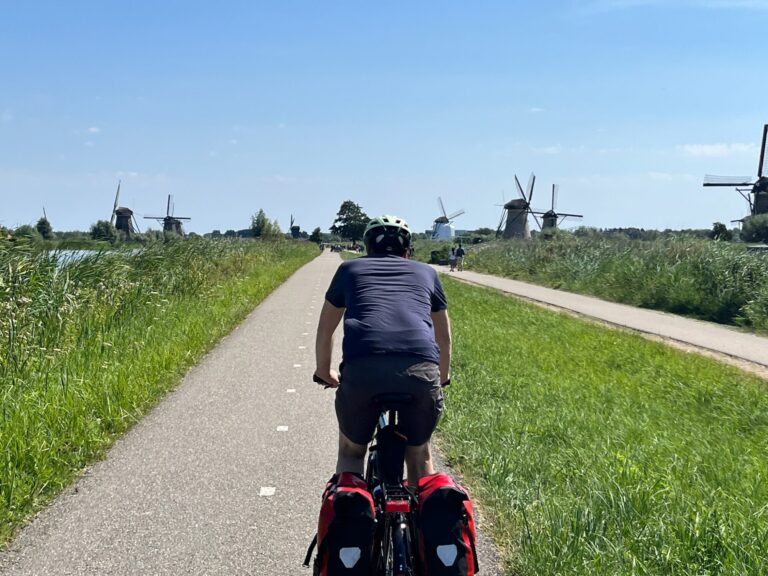
Shortly after Rotterdam, you cycle past the (overly) touristy row of historic windmills at Kinderdijk, before riding on to the ’De Biesbosch’ national park. It is a vast freshwater tidal area at the heart of the river delta (Meuse – Rhine), on the border between South Holland and North Brabant. A maze of creeks with an abundance of tidal flora, a true paradise for (water)birds. It is impressive to see how nature conservation and water management go hand in hand here.
Once in Brabant, you ride past many well-preserved fortified towns such as Woudrichem, Heusden, Ravenstein and Grave. These little towns are delightful, with their ramparts, town gates, cobbled streets and canals. Here, the Meuse is also a meandering river where room has been made for flooding. You therefore cycle mostly through open, varied natural landscape, with numerous small ferries taking you from one bank to the other and back again. As you head further south, the (Bergsche) Maas first forms the border between the provinces of North Brabant and Gelderland, then between North Brabant and Limburg, until finally, just after Boxmeer, you enter (Dutch) Limburg.
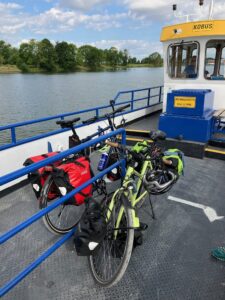
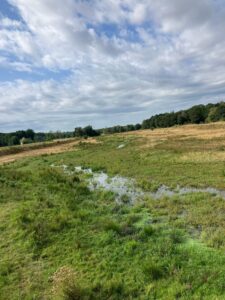
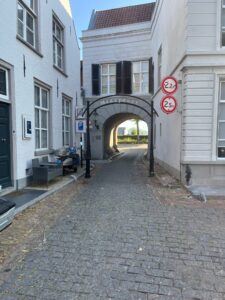
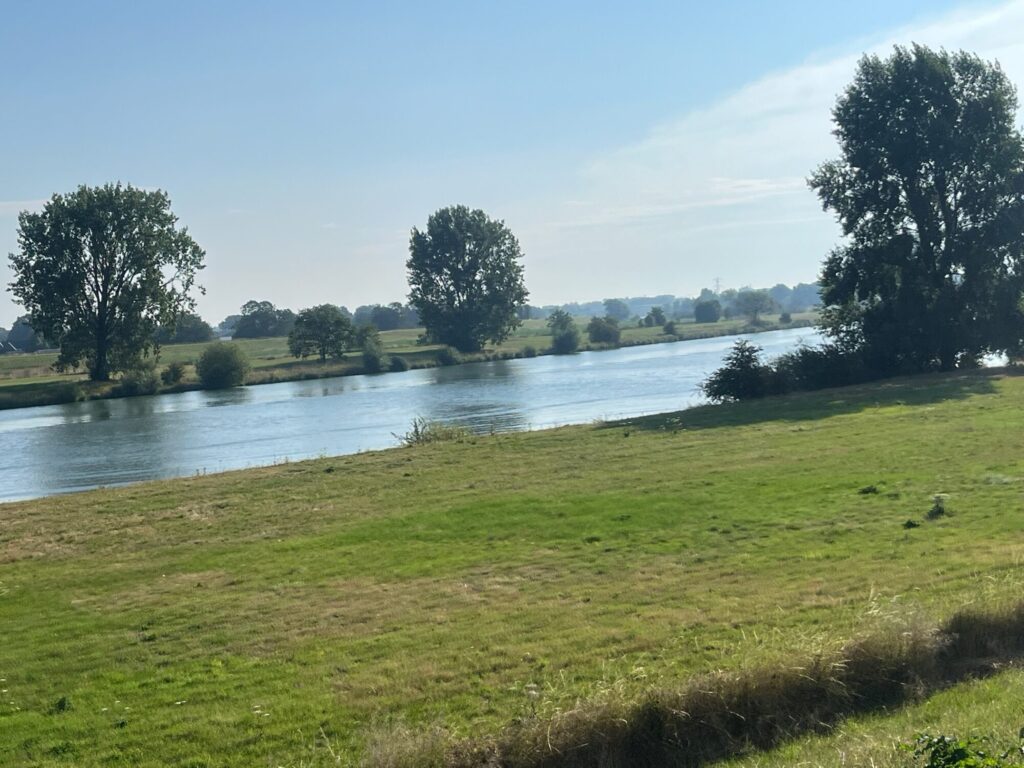
Here, too, you cycle past a stunning national park: ‘De Maasduinen’. A remarkable landscape of river dunes, heathland and woods. The Rhine (!) once flowed here. The further south you go, the harder it is to escape Limburg’s convivial atmosphere: café terraces and ice-cream parlours galore. After the Maasplassen lakes near Roermond, we crossed the Meuse and entered Belgium at Dilsen-Stokkem. Via Maaseik and along the meandering Grensmaas, we rode towards Maastricht. It must be said: the cycling infrastructure in Belgian Limburg is first-rate and can rival that of the Netherlands. A ferry took us back to the Dutch bank.
Belgium
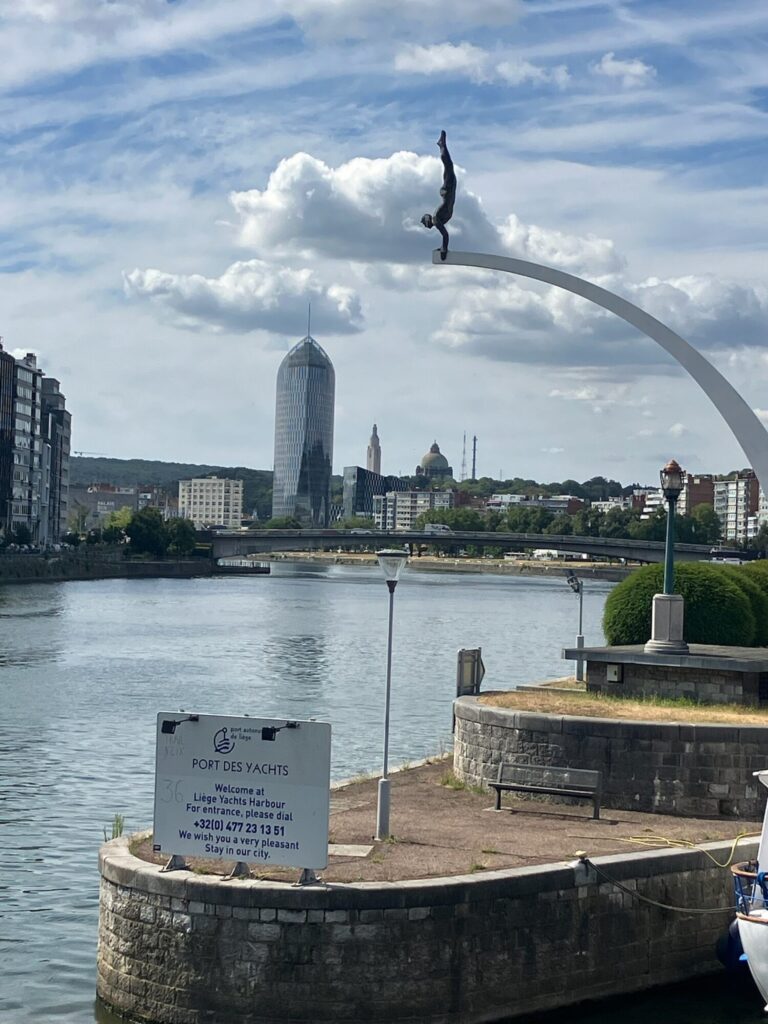
We left our campsite near Maastricht early in the morning to begin the Belgian leg of our journey. Between Visé and Liège there were numerous roadworks along the route, and the diversions were anything but cycle-friendly, as well as poorly signposted. The ride through Liège itself was pleasant, but once past the city you cycle through a bleak setting: first run-down residential areas, then derelict and still-active industrial sites. In the words of Paul Benjaminse: ‘The river used to be the artery along which all activity flowed; the river has remained, surrounded by a wasteland of buildings and open wounds.’ (our translation)
So from Liège to Huy, it is a matter of hanging on. We arrived in Huy in the late afternoon. It was a sunny day. After a lovely meal on the main square, we decided to push on to Namur. With the sun setting and the Meuse meandering alongside us, it was as if every pedal stroke erased the less pleasant moments of the day. Arriving in Namur in the evening sun was simply magnificent!
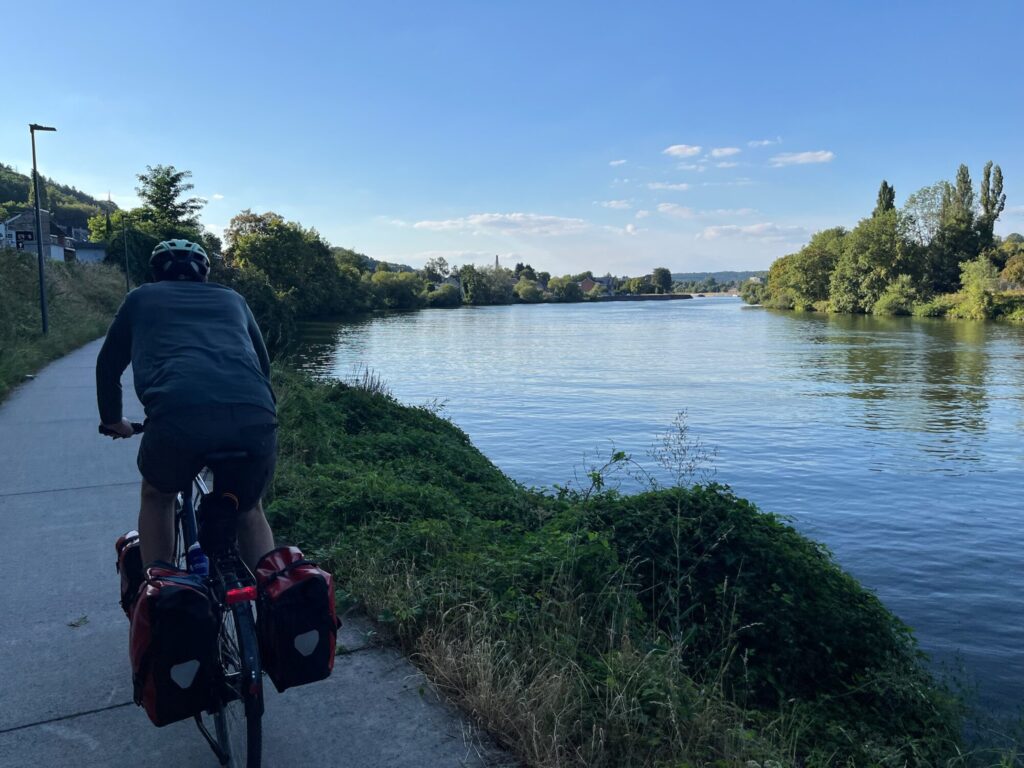
Coming from the Netherlands, what stands out is the absence of ferries. There are also noticeably fewer bridges across the river in Belgium. It is as if the river here is a crack in the landscape, whereas in the Netherlands it is much more a part of it.
Namur was a real revelation for us: we spent a day strolling through the old town centre and visited the citadel. It is a vibrant city. Lovers of culture, food and shopping will certainly get their money’s worth. In the late afternoon, we rode on towards Dinant. The landscape now becomes truly Ardennes-like, with the river winding between wooded hills and rock formations. Our campsite that night was nearby the Lesse, close to where it flows into the Meuse and not far from the French border.
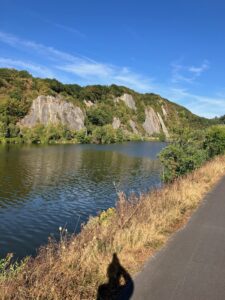
France
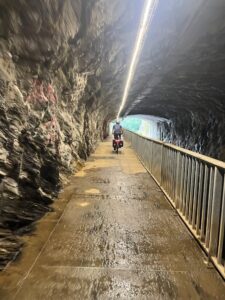
Another very hot day was on the cards, so we were on our bikes early, heading for France. After an invigorating coffee and an equally invigorating breakfast at the local bakery in Hastière, we crossed the border to Givet, the first French town on our route. We were astonished by the cycling facilities we found in the Ardennes department: the ‘La Meuse à vélo’ route is well signposted and traffic-free, and the tarmac is as smooth as a billiard table. We alternated between riding along the water and through the woods on the hills flanking the river. The French, too, have made major interventions in the course of the river. Just before Revin, we rode through a tunnel in the rock alongside a small canal that cuts off a bend in the river. That day we ended up in Monthermé, at a typical French campsite.
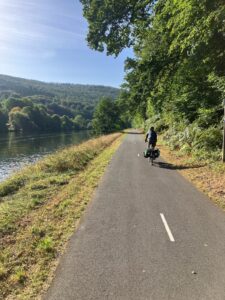
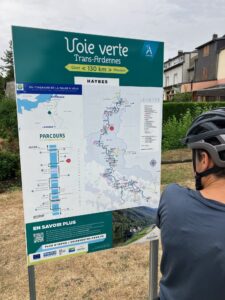
The difference in campsite facilities between the Netherlands on the one hand and Belgium and France on the other is striking. In the Netherlands, we decided during the day where we would stop for the night. After all, there are plenty of options: nature campsites, farm campsites and so on. In Belgium and France, you don’t have that luxury. There is far less choice and the quality is considerably lower. In Belgium, ‘Welcome to my garden‘ can be a good alternative.
Finding supplies isn’t easy in France either. The villages we passed through no longer have a local shop. At best, there is still a boulangerie.
After Monthermé, we planned to stop at the municipal campsite in Mouzon. Once again, a very early start to beat the heat somewhat. The landscape gradually changed from hilly and wooded to gently rolling, open farmland. We were slowly leaving the Ardennes behind.
In Mouzon, we met three friendly French touring cyclists on their way to Amsterdam. They gave us a golden tip: buy both breakfast and lunch early in the morning at the local boulangerie. Even at that early hour, alongside the usual baguettes and croissants, you will find filled rolls, focaccias and more.
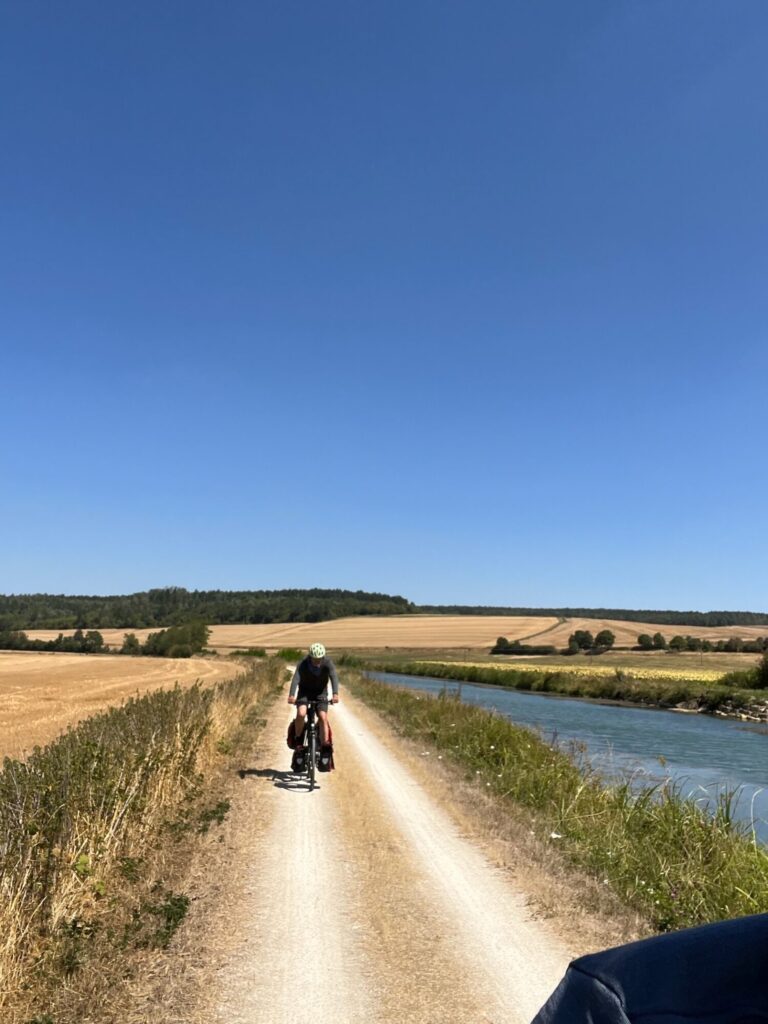
Our next stop was Verdun. Shortly after Mouzon, we entered the Meuse department. Here, the ‘La Meuse à vélo’ cycle route has not yet been built. We now rode on small departmental roads, cycling through the Meuse valley rather than right along the river. It turned into an undulating ride under a (too) hot sun, but through varied scenery. The Meuse flows through limestone country here, and this is noticeable along its banks. The river and the canals beside it no longer serve any economic purpose. Nature is gradually taking over, resulting in remarkable flora and fauna along the banks. Naturally, in this region you cannot escape the legacy of the 1914–18 war.
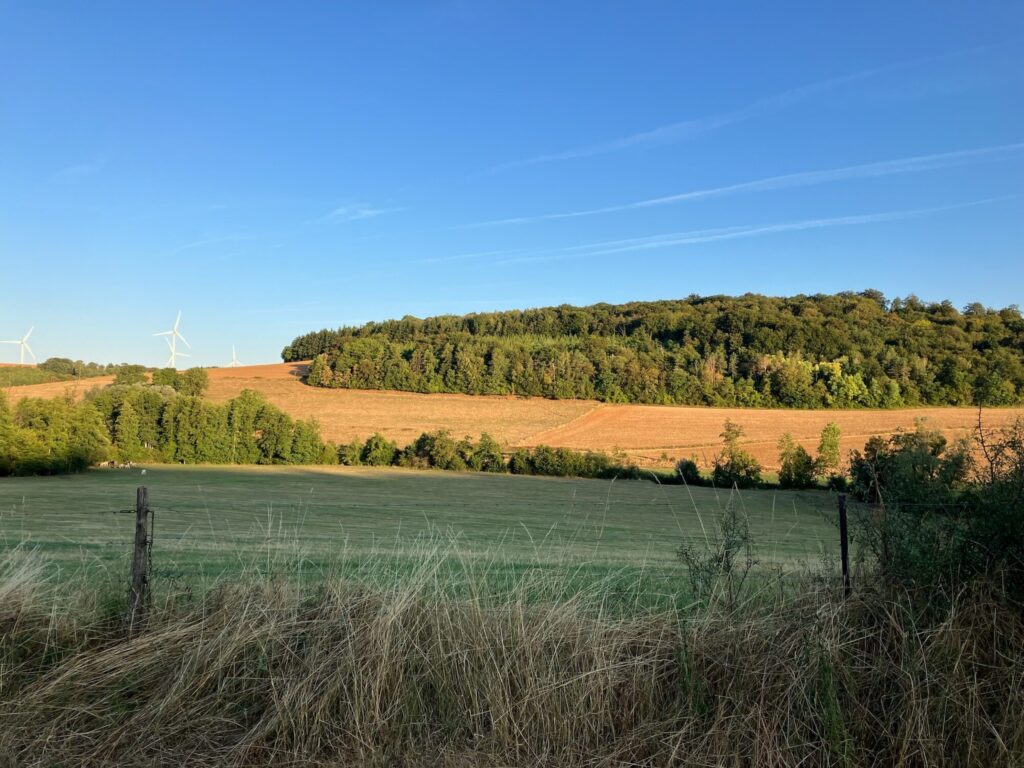
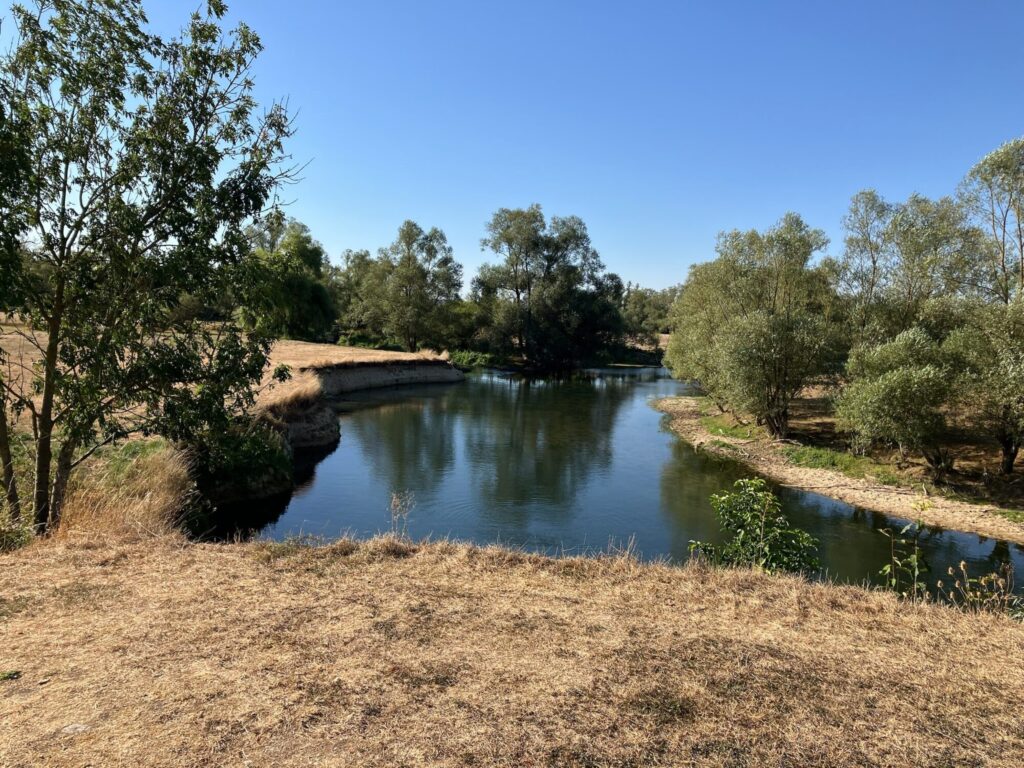
At the start of our trip, the plan was to cycle all the way to the source of the Meuse (Pouilly-en-Bassigny), then cross over to the Moselle valley and follow it north to Nancy. From there, we would return to Brussels by train via Luxembourg. In Verdun, however, we learned that the Nancy – Schengen (Lux.) rail connection was suspended due to engineering works. Bicycles are not allowed on the replacement buses. We therefore decided not to cycle quite so far south, but to turn off towards the Moselle shortly after Verdun and then follow ‘La Voie Bleue‘ into Luxembourg.
We left Verdun at daybreak and, after the customary stop at the boulangerie, followed the Meuse to Bannoncourt, some 30 km south of Verdun. We even spotted a beaver there. Along quiet departmental roads, we climbed out of the Meuse valley towards the Lac de Madine. The view of the lake from the ridge is magnificent. This is mirabelle plum country, and the harvest was in full swing. Once we reached the Moselle valley, a long, gentle descent followed all the way to Vandières. We were now cycling along the Moselle, downstream towards Luxembourg.
Luxembourg
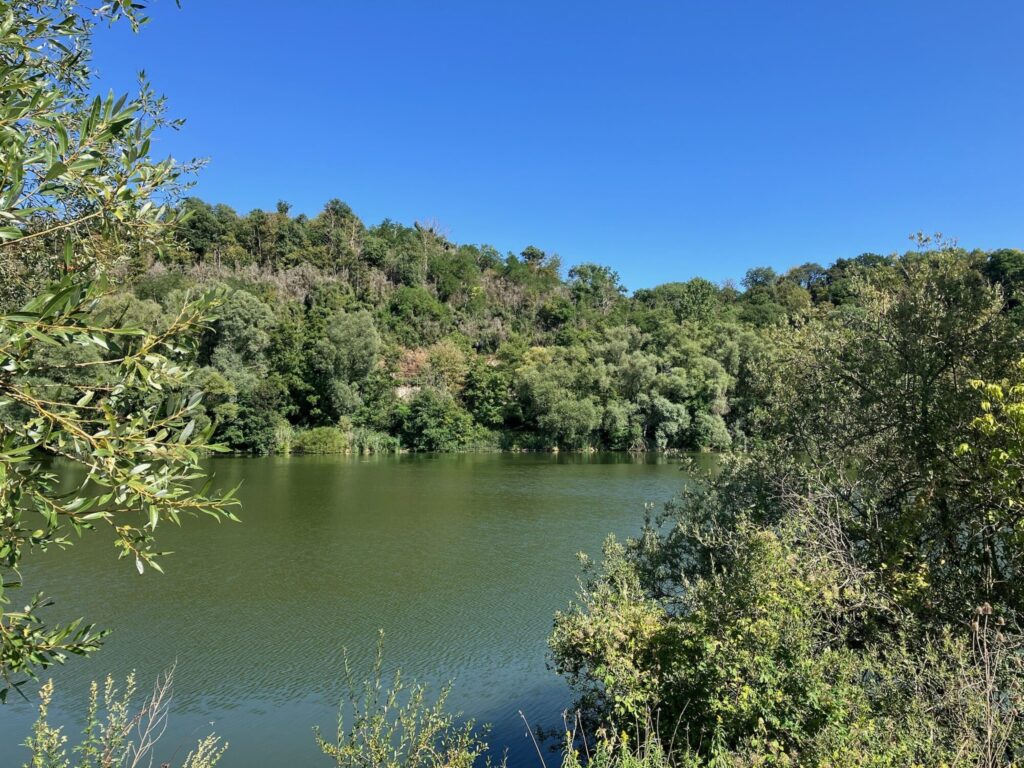
This cycle route, too, is well signposted and the cycling infrastructure is more than good. As we approached Luxembourg, the first vineyards appeared along the banks. Here too, it is striking how many canals, locks and reservoirs there are alongside the river. After Metz, economic activity clearly increases, which makes the stretch between Metz and Sierck-les-Bains on the Luxembourg border less appealing.
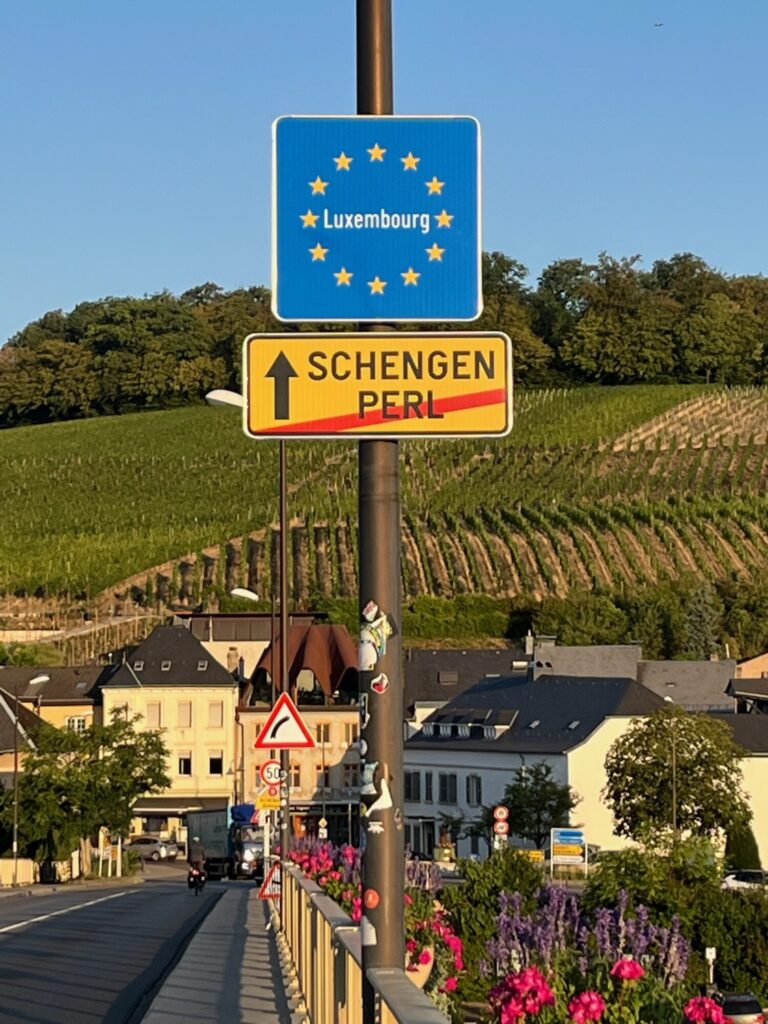
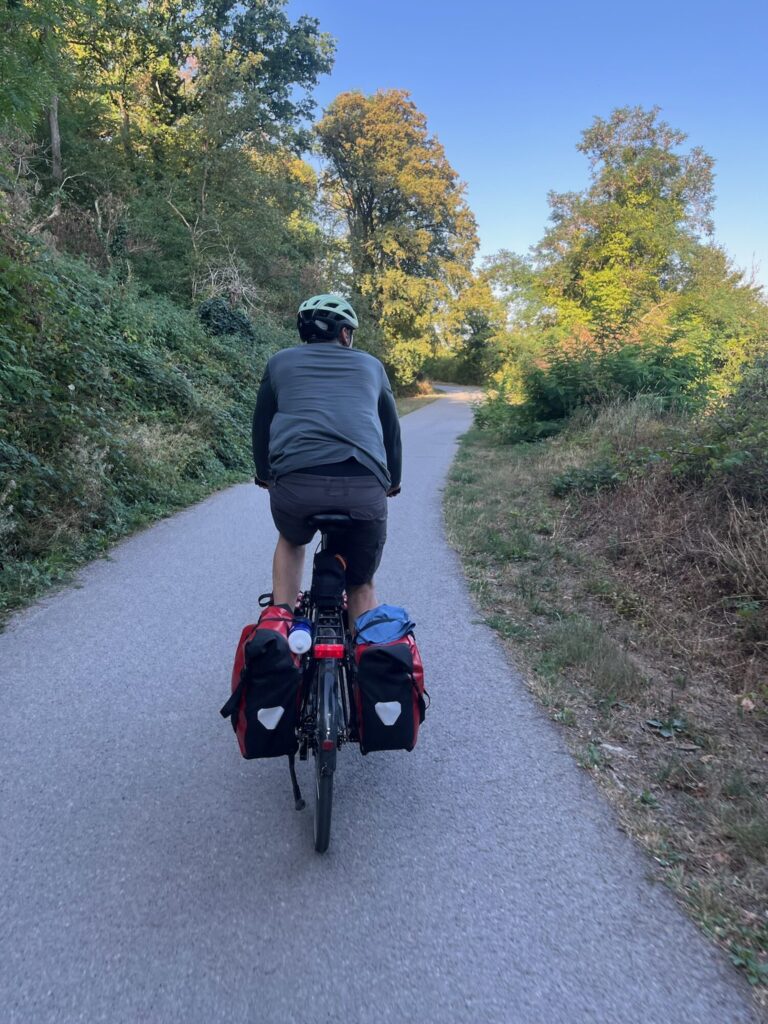
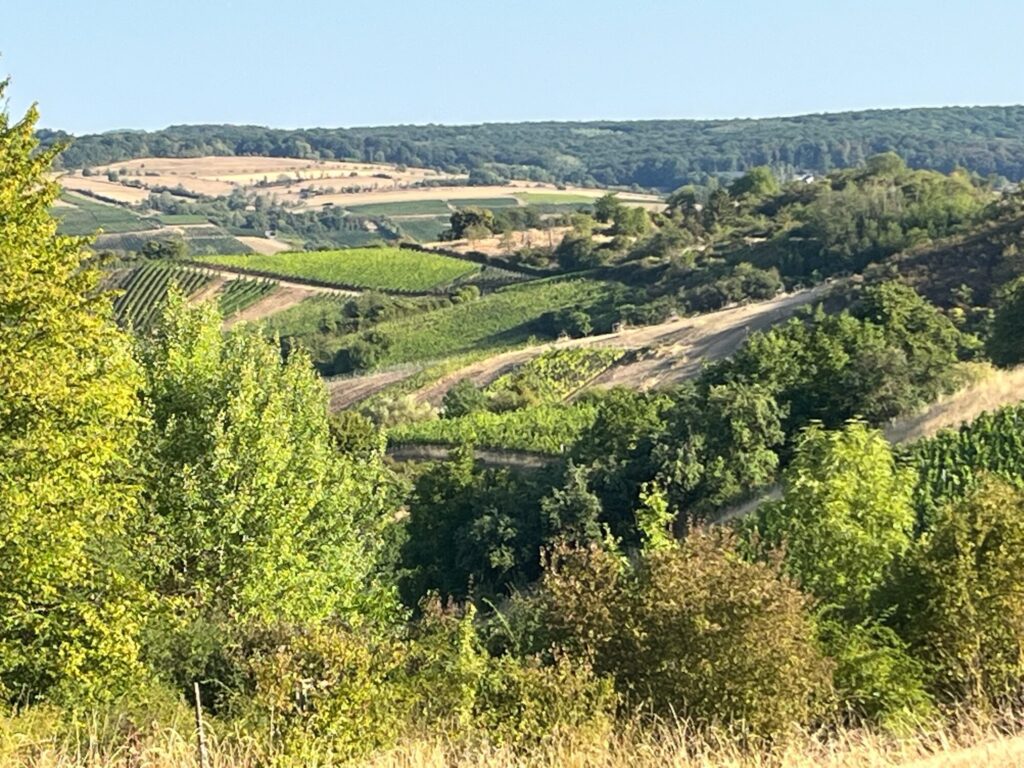
In Sierck-les-Bains, we met a local cyclist who recommended a beautiful route to Luxembourg City. We gratefully took his advice and, on our final day of cycling, rode a little further along the Moselle via Schengen to Remich, before climbing the slopes of the Moselle valley through the vineyards. Once at the top, we rode across a kind of plateau through woods and fields, finally descending via Hesperange to the lower town of Luxembourg. This was a truly beautiful end to our trip.
All in all, we cycled some 1,000 km in 13 days in the saddle. It is certainly not a difficult route, and the cycling infrastructure was good to very good.